GoldmanSachs666 Message Board

Fraud*
According to the Collins English Dictionary 10th Edition fraud can be defined as: "deceit, trickery, sharp practice, or breach of confidence, perpetrated for profit or to gain some unfair or dishonest advantage".[1] In the broadest sense, a fraud is an intentional deception made for personal gain or to damage another individual; the related adjective is fraudulent. The specific legal definition varies by legal jurisdiction. Fraud is a crime, and also a civil law violation. Defrauding people or entities of money or valuables is a common purpose of fraud, but there have also been fraudulent "discoveries", e.g. in science, to gain prestige rather than immediate monetary gain
*As defined in Wikipedia

Friday, August 5, 2011

Goldman Sachs As Part of the "Predator State"

James K. Galbraith wrote a book in 2007 called The Predator State--How Conservatives Abandoned the Free market and Why Liberals Should Too. Chapter 10 deals with The Rise of the Predator State which put me in mind of the role that Goldman Sachs plays in the US and elsewhere.

Galbraith talks about a new leisure class that has arisen in America which sets out to take over the state and run it for the purpose of making as much money for itself as it can. Should things go wrong, he says, the predators provide rescue for themselves. This high-paid class preys on existing American institutions that regulate and/or provide welfare for all its citizens.

Predation occurs where this very rich leisure class does not work but holds office and performs work rituals. Income is valued for the prestige that if offers rather than for the work that is being done. Predation is what this class does: they do not provide work of social value but rather live off the work of others. (Some of these ideas in the book come from Thorstein Veblen).

The excerpt below is found on p 127:
The ecology of predator-prey relationships is one of mutual interdependence. Predators rely on prey for their sustenance, but they also require and must motivate their assistance. The normal function of the clan, tribe, family unit, or company is not to enrich the owner or master at the expense of the underlings, but to enrich him at the expense of surrounding clans, tribes, families, or companies. In this contest, the underlings naturally must enjoy some benefit both to motivate their cooperation and illustrate the success of the collective enterprise. The success of the enterprise depends in turn on keeping the predators sufficiently in check. If in their compulsion to fight, they lay waste to the environment, then neither they nor their prey will survive.

Such predation is made possible through deregulation where the business community, for example, no longer plays by a common rule (e.g., a shadow banking system emerges that is not open to public scrutiny). Power devolves to the CEO rather than to the entire organization or corporation. The CEO is the front man who appears not to know everything that is going on in his company.

Public and private collaboration diminishes. Business leadership seeks to prevent public purposes through the complete control of the state. Economic activities become opportunities for profit alone. These firms are not loyal to any country; they are loyal only to the pursuit of profit. The public purpose of the state is alien to them.

(End of the summary of ideas.)

. . . . . . . . . . . . . . . . . . . . . . .

To apply these ideas to the financial system in general and to Goldman Sachs in particular, Goldman Sachs sets out to maximize its profits and to serve out its bonuses without restraint. Huge bonuses given to the underlings ensure their continuing work for GS.

Goldman Sachs has many men in the government who will look out for its interests and who will make sure that the profit making continues unabated. Thus, you see the Treasury Secretary, H. Paulson, formerly of Goldman Sachs, consulting with his former firm and other banks before bailing out another firm like AIG (the prey) on which GS is dependent. GS works for GS.

Many alumni from GS have gone both ways through the revolving door of government and finance. So you have someone like Rubin, who worked for GS for 26 years, becoming Secretary Treasurer and then works in the government to prevent regulation of derivatives, for example, from which GS makes billions of dollars. When Rubin leaves that position, he goes back to working for Citigroup, another financial company.

Geithner provided rescue for GS before anyone in government thought about the needs of main street in the wake of numerous foreclosures. Firms like Goldman Sachs took advantage of sub-prime mortgages to create derivatives and to make money from the suffering of homeowners.

Besides providing men to run the financial system for the government, Goldman Sachs lobbies to get bills struck down or manipulated if they attempt to regulate banking activities. GS pays politicians on both sides of the aisle to promote laws that are favorable to GS's activities. GS gives large amounts of money to both the Republicans and the Democrats in an effort to promote and advance their policies and profits.

The bundling of mortgage-backed securities that were exchanged in an opaque manner provided GS with vast amounts of money for the predatory firm, money that came from pension funds, savings, and the investments of homeowners or, in other words, from the public.

When Blankfein was questioned by the FCIC, the commission to investigate the causes of the financial meltdown, he stated that he regretted not making clear to the public just what socially responsible work Goldman Sachs does. Well, Goldman Sachs does not do anything that is socially responsible because it is only responsible for its own profit-making and cares nothing about society as individuals or in general.

Blankfein also claimed that no one knew that a bubble crash was going to occur and yet he knew full well that to bet against the mortgage market would make his company billions: he played well the role of front man who doesn't know what is going on. Firms like GS are always searching for new ways to make private profit usually at the expense of public organizations.

Blankfein may not have known exactly what day the bubble would burst but because he and his company securitized sub-prime mortgage backed loans which were rated as extremely safe then sold them to clients as such knowing all the while that they would turn to junk (which happened). Goldman Sachs got richer; the public at large got much poorer.

GS has contributed mightily to the financialization of the GDP and that is hardly socially responsible.

Two more quotations are in order. This from p. 147:

Predatory regimes are, more or less exactly, like protection rackets: powerful and feared but neither loved nor respected.

and from p. 145:

Predators do not mind being thought incompetent: the accusation helps to obscure their actual agenda.
. . . . . . . . . . . . . . . . .

The first three chapters of the book, The Predator State by James K. Galbraith can be found here

Thursday, August 4, 2011

Poor Goldman Sachs, Suffering From Uncertainty!

Is it possible that the worse Goldman Sachs feels, the better the rest of us are? At a conference for Wall Street investors held in June 2011, Brad Hintz mentioned that new regulations might injure Goldman Sachs's franchise.

Instead of pointing to its own dismal record in helping bring about a financial meltdown through derivatives, Goldman's Cohn blames regulatory uncertainty. However, regulation of derivatives might have saved the American citizens' pensions, savings and even their unions.

Goldman Sachs only needs to adapt, Cohn says. We say, Let the banks suffer some of the pain they inflicted on the average middle- and working-class American. One of their "profound change" objectives should be a return to ethical and moral standards--to do unto others as they would have others do unto them. That is God's work!

If the only penalty that Goldman Sachs has to suffer is uncertainty of the markets, which they brought upon themselves, that would be ample reason for their earning a "Dubious Distinction" award.

There really should be criminal prosecutions at Goldman Sachs; that would be uncertainty we understand and condone.

Goldman Sachs Model at Risk as Dodd-Frank Pares Trading in Dark

By Michael Serrill - San Francisco Chronicle

. . . .

AllianceBernstein Holding LP sponsored the conference for beleaguered Wall Street investors. Goldman's stock was down 20 percent for 2011 at the time, Bloomberg Markets magazine reports in its September issue.

Even before the audience got its chance to throw questions at the Goldman executives, Bernstein analyst Brad Hintz, who introduced them, took a shot, according to a recording of the proceedings on Goldman's website.

"The market is very suspicious at this point," he said, adding that what investors feared most was that new regulations coming out of Washington and Basel, Switzerland, would do lasting damage to Goldman's franchise.

"Goldman stock has been crushed," Hintz said, adding a touch of personal pain. "I have an 'outperform,' and frankly, it hasn't worked so far."

Cohn had come prepared.

"It is not surprising that the potential impact of regulation on the structure of the capital markets and the implications to financial institutions loom large in investors' minds," he said.

Then he set out to convince skeptics that the stock's drop was an investor perception issue, not a reflection of a diminished future for Goldman. He said a changed marketplace could still be a fruitful one for firms that are fast on their feet.

"Our ability to adapt has remained consistent," he said.

Cohn didn't say it would be easy. New rules and roiled markets are turning Goldman's world upside down. In October 2007, its stock sold for $236. On Aug. 1, it cost $134.15. Revenue was down to $39 billion last year from $46 billion in 2007, while profit fell to $8.4 billion from $11.6 billion.

The bad news didn't stop when Goldman issued its second- quarter earnings report on July 19. Revenue dropped 39 percent, to $7.28 billion, from the same period a year earlier. Net income was $1.09 billion, less than half the $2.3 billion the bank earned in the second quarter of 2007.

Fiona Swaffield, a bank analyst at RBC Capital Markets in London, estimates that new regulations are likely to push Goldman's pretax profit 20 percent lower than it would have been without the new rules, which are being formulated by Washington agencies under the 2010 Dodd-Frank law and by the Bank for International Settlements in Basel.

If Goldman is going to maintain its status as one of the world's most profitable investment banks, it will have to undergo profound changes, Hintz says. The bank has already closed down two of its trading desks to comply with the Volcker rule, the section of Dodd-Frank that prohibits proprietary trading and limits direct investment in hedge and private-equity funds.

The bank is also preparing to revamp its over-the-counter derivatives business, which under Dodd-Frank must be moved onto exchanges and into clearinghouses. And under the new BIS rules, called Basel III, Goldman will be required to increase the equity capital it holds against its risk-weighted assets to as much as 9.5 percent by 2019 from the roughly 8 percent it held in mid- July.

In the first quarter, Goldman still held $11.9 billion in private-equity and hedge-fund investments, which Dodd-Frank restricts to 3 percent of a bank's equity capital.

"These are funds Goldman will have to wind down under the Volcker rule," Swaffield says.

Goldman sees technology, including new, so-called low-touch digitized trading systems, as the savior of its derivatives businesses, says analyst Richard X. Bove at Stamford, Connecticut-based Rochdale Securities LLC.

"They are looking to use tech to lower the cost of transactions to levels competitors can't reach and then to price off that low-cost base to attract much higher volumes," Bove says.

The firm's other strategy for keeping revenue and profits high is to "chase GDP," as he said at the conference, by waving the Goldman flag in hot global markets, including the BRIC countries: Brazil, Russia, India and China.

Read the entire article here

Wednesday, August 3, 2011

The Compartmentalization of Goldman Sachs's Activities

It seems that a recession is only acknowledged when the "Big Guns" are affected. Goldman Sachs reports on fears for the economy only, it seems, when the recession affects them; when their revenues decrease; when they have to lay off 1,000 workers in order to maintain their enormous profits; when they get worried about new financial regulations.

Does Goldman Sachs ever think about the major role they played in originally bringing about the recession that we have been enjoying since 2008; about the borrowing of huge amounts of money to prevent insolvency; about their role in removing wealth from all other sectors of the economy into their own coffers; about their being able to successfully compartmentalize their actions and ethics so effectively?

Insight: Debt relief replaced with recession fear
By Neil Fullick - Reuters

Former Treasury Secretary Lawrence Summers said in a Reuters column there is a one in three chance of a U.S. recession. According to number crunching by Goldman Sachs, history suggests the economy is perilously close to tipping over the edge.

Signs are little better elsewhere. Italy and Spain are edging closer to the euro area debt danger zone, China's economy is slowing and Japan is mired in recession after the March earthquake.

The gloom is hitting the corporate world as analysts cut earnings forecasts globally, especially in export-led economies, and big banks have announced tens of thousands of job cuts.

"The odds of the economy going back into recession are at least one in three if nothing new is done to raise demand and spur growth," Summers said of the United States in his column.

"If these judgments are close to correct, relief will soon give way to alarm about the United States's economic and fiscal future."

The alarm bells may already be ringing. Most worryingly for financial markets, the U.S. administration's commitment to fiscal spending cuts could make any U.S. downturn worse.

Read the entire article here

Tuesday, August 2, 2011

Goldman Sachs--Wreaking Havoc in Government

According to an article in DealBook by Andrew Ross Sorkin, Mr. Adam Glass, who is known as an honest, hard-working and ethical man and who is now a senior lawyer at the SEC, was also connected with the Abacus deal that John Paulson cooked up with Goldman Sachs, a deal which lead to the civil fraud suit that brought charges against GS. In other words, Mr. Glass helped create securities which brought about the financial meltdown in 2008. Now he is a member of the SEC organization that has been given the job of writing new rules for derivatives!

There is, at the very least, a conflict of interest on Glass's part and because of what we know about other people's conflicts of interest, namely, Rubin, H. Paulson, Summers, Gensler, etc., we should all be very wary of having people who believe in the deregulation of derivatives and who support the shadow banking system; and make sure not to put them in positions of power where the welfare of the citizens of the US should be the main concern, not the ginormous wealth of the bankers.

As for the fox being in the henhouse to improve and correct the system, I say: No, No, NO, you misunderstand: the fox is in the henhouse not to guard the interests of the hens; he eats them, destroys them, annihilates them. And that is what the revolving door has done for the financial system of the USA. There should be no appearance of conflict as well as no actual conflict of interest.

Also consider, as one commenter has, that there have been no convictions brought by the SEC against bank executives that caused the financial meltdown. One reason for no criminal convictions could be the conflicts of interest at the SEC.

Revolving Door at S.E.C. Is Hurdle to Crisis Cleanup
By Andrew Ross Sorkin - DealBook

A senior lawyer for the Securities and Exchange Commission recently took center stage in a major case involving a controversial mortgage security sold by Goldman Sachs.

There was just one slight twist in the legal proceedings. The S.E.C. lawyer was not the prosecutor taking the deposition. He was the witness.

This summer, Adam Glass — who joined the agency two years ago and is now co-chief counsel in charge of helping write the rules for the complex financial instruments known as derivatives — testified in a deposition about Goldman’s Abacus, a mortgage investment that the government argues was designed to fail.

It turns out that Mr. Glass has a unique perspective on Wall Street exotica. Before working on the financial crisis cleanup, he helped create the opaque securities that contributed to the mess.

For many years, Mr. Glass served as the outside counsel to Paulson & Company, the giant New York hedge fund firm run by John Paulson, who made billions betting against the housing market. And yes, Mr. Glass, in that role, signed off on Abacus, which was created specifically for the hedge fund to short subprime mortgages. Mr. Paulson handpicked some of the underlying investments in the derivative.

The government, in its complaint, claimed that Goldman had “misstated and omitted key facts regarding” Abacus, including disclosing Mr. Paulson’s role in its creation. The firm paid $550 million to settle the case, without admitting or denying guilt. Mr. Paulson was never accused of any wrongdoing.

Mr. Glass’s recent deposition was for a separate S.E.C. case against Fabrice Tourre, the young Goldman trader who had developed and marketed Abacus to investors. Mr. Tourre, 31, has denied the accusations.

The revelation of Mr. Glass’s involvement in the Abacus deal could undermine the S.E.C.’s case — or at least prove to be a distracting embarrassment.

Perhaps more important, his role once again raises questions about the revolving door between Washington and Wall Street at a time when public distrust about the agency and its lack of enforcement action against the culprits of the crisis is running high.

“There are a lot of talented people out there you could hire who weren’t necessarily part of the problem,” said Mary Kreiner Ramirez, a professor at Washburn University School of Law. “If he was involved in Abacus, how is he supposed to police it?”

It is a common question as the government increasingly looks to fill its ranks with regulatory officials proficient in the language of Wall Street. Robert S. Khuzami, the S.E.C.’s director of enforcement, was previously the general counsel of Deutsche Bank. The agency tapped Eileen Rominger, the former global chief investment officer at Goldman Sachs Asset Management, as its director of investment management.

“The revolving door is such a dominant fact about the S.E.C.’s culture,” said John C. Coffee Jr., a Columbia Law School professor. “You get people who go to Washington for one to three years and then go back to Wall Street.”

Read the entire article here

. . . . . . . . . . . . . . .

Warning: the following video uses violent images and coarse language:


You can view the video here

Monday, August 1, 2011

Ry Cooder and Goldman Sachs

Today we need a little uplifting singing to start our day, so here is a little song (play it loud and play it often as an anthem for our time) by Ry Cooder:


You can view the video here

As Our Economy Tumbles So Might Goldman Sachs

This is big.

Business Insider just reported that Landsdowne Partners, one of Goldman's top 20 investors has dumped its entire $850 million stake.  Wow, talk about lack of confidence. Of course, as you will see, they are taking some losses also and their investment in GS is not helping them at all. 

BI goes on to explain,
The Telegraph cites four reasons why the $10 billion long/short equity hedge fund run by Stuart Roden and Peter Davies sold the huge stake:
  • Dodd Frank legislation that caused Goldman to get rid of its proprietary trading business
  • Capital requirements 
  • "The bank saw its shares hit a two-year low of $125.50, having fallen 19.2% this year"
  • "Profits in the second quarter of the year fell to $1.09 billion, from $2.7 billion in the first three months of the year, as its behemoth Fixed Income, Currency and Commodity division saw revenues tumble by 64pc from the first quarter"
Read more:...click here

Also in Business Insider Clusterstock:

THE REVOLVING DOOR: 29 People Who Went From Wall Street To Washington To Wall Street

Interesting to see all the Goldman crowd in there as well as some other very interesting characters who have influenced our government and our economy.

Read more...click here

Even More from Business Insider Clusterstock.

Goldman Sachs Traders Quitting The Bank In Droves
"More than a dozen traders have quit Goldman Sachs... North American government bonds and derivatives trading desk in New York in recent months as the bank takes fewer risks and big bonuses for ambitious traders dry up," Lauren Tara LaCapra reports at Reuters.

Finally have a few laughs compliments of...you guessed it - Business Insider Clusterstock

15 Reasons You Don't Want To Work At Goldman Sachs

Read more...click here
Enhanced by Zemanta

Sunday, July 31, 2011

About Banks and Money

Thanks to my friend Ed who posted this on his FB page.  The story of money in an easy to understand cartoon characterization. 


As the cartoon says at the end...End The Fed!  The Fed and their cronies -all the banks and those like Goldman Sachs who got to be a bank but are not really a bank but yet can get all the benefits and privileges of a bank without having to have any retail locations, take in any deposits or have checking accounts...whew!

Give it a watch.  Good way to end the weekend or begin the week.

Positive Signs From Goldman Sachs

Just the anticipation of financial reform is changing Goldman Sachs's business policies. Apparently, Goldman Sachs is asking traders not to take huge risks and, as a result, the big bonuses are being trimmed. Goldman Sachs is just another investment bank and not particularly exceptional except sometimes exceptionally bad. Revenue has dropped as already predicted.

Maybe Goldman Sachs should call itself a hedge fund in order to take more risks and make richer bonuses. Then investors will know what they are dealing with. Maybe the shine is permanently off Goldman Sachs.

Here's an article to warm the cockles of your heart:

Goldman Sachs rates desk hemorrhages traders
By Lauren Tara LaCapra - Yahoo Finance

NEW YORK (Reuters) - More than a dozen traders have quit Goldman Sachs Group Inc's (NYSE:GS - News) North American government bonds and derivatives trading desk in New York in recent months as the bank takes fewer risks and big bonuses for ambitious traders dry up.

Goldman has been handing out promotions and better pay to its salespeople rather than the traders who manage the bank's inventory of securities and derivatives, people familiar with the bank's operations said.

The changes reflect Goldman's shift toward client trading and away from making money by betting for its own account, those sources said. Weak trading in general has compounded Goldman's difficulties as it struggles to earn profits from clients without the help of its market bets, analysts said.

It makes sense for Goldman management to reward sales staff over traders these days, said Susquehanna Financial Group analyst David Hilder.

"The client franchise is paramount," said Hilder. "You need sales people to deal with and talk to the clients. Over the long term, that's more important than a few guys trading bonds."

Among the recent departures is Brian Mooney, an interest-rate derivatives trader who spent 22 years at Goldman before joining Bank of America Corp's (NYSE:BAC - News) Merrill Lynch this week, according to three sources who know about the move.

Mooney's exit follows that of Glenn Hadden, the former head of Goldman's U.S. Treasury bond trading desk, who left last year to run Morgan Stanley's (NYSE:MS - News) global rates trading group in January.

At least nine other traders from the rates desk have left for jobs at competitors this year, including UBS AG (VTX:UBSN.VX - News), Nomura Holdings Inc (Tokyo:8604.T - News), Jefferies Group Inc (NYSE:JEF - News) and JPMorgan Chase & Co (NYSE:JPM - News), or hedge funds like Stark Investments near Milwaukee. Among their ranks were more junior traders, some of whom were seen as rising stars at Goldman.

Goldman has been laying off traders since March, but there has also been a flood of voluntary exits that began late last year and continued through the second quarter, sources said.

Colin Corgan, a respected partner on the rates desk, retired in late 2010. In March, Craig Reynolds, a former top interest-rate swaps trader at Goldman, left to become head of Bank of America Merrill Lynch's North American interest-rate trading desk.

Goldman has given additional responsibilities to remaining staffers and promoted others. For instance, Jonathan Hall, a rates trader in London, was tapped to oversee the entire U.S. rates trading operation after Hadden left. But the bank has kept many of the seats empty as it looks to keep staffing levels tight.

Some traders that have left the bank said they fear Goldman may turn into just another investment bank, and they wanted to leave while it was still seen as prestigious on Wall Street.

"Working for Goldman is no longer different than working for anybody else," said one former Goldman trader who left this year. "At the same time, if you have Goldman on your resume, that's still a premium. People are monetizing the Goldman premium now because two years from now you won't be able to."

"Goldman Sachs is totally committed to the interest rate products business," said spokesman Michael DuVally. The bank is staffed appropriately for the business, he added.

SPECTER OF THE VOLCKER RULE

Goldman's North American rates-trading desk handles some of the most actively traded markets in the world, including U.S. Treasury bonds and U.S. dollar interest-rate swaps.

The desk is to some degree shielded from a financial reform provision called the Volcker rule that will prevent banks from gambling on market direction.

The rule is not in effect yet, but even once it is implemented, banks will still be allowed to take proprietary positions in the Treasury market and hedge against risk using related derivatives.

Read the entire article here

Saturday, July 30, 2011

Goldman Sachs's Fraud Was Far Larger than Madoff's

Here is another video interview with Matt Taibbi about the aftermath of the financial meltdown. Lack of law enforcement and prosecutions probably mean that there will be another financial crisis which may result in banks being bailed out by the government unless the laws and the politics change. Politicians seem isolated from what the average American is going through (with foreclosures and loss of savings).

Wall Street and Washington have a commingled relationship or a "revolving door" which puts financial people into government and government people into the financial system until they become one and the same entity.


See the video here

Friday, July 29, 2011

Goldman Sachs's Underwriting Assailed by Judge

William K. Black has described what happens when banks are deregulated, de-supervised and decriminalized in an article posted on the New Economic Perspectives blog called "The High Price of the President's Council of Economic Advisors' Failure to Read Akerlof & Romer." In that article, he describes the dangers of accounting control fraud in banks which can be evident in their underwriting practices as follows:
...A well run banking system does reduce adverse selection and make markets less inefficient. A well run banking system does so by engaging in expert underwriting of significant loans such as home loans. A bank that does not engage in expert underwriting poses a grave danger. At best, it is incompetent. Far more dangerously, it is often engaged in accounting control fraud. A regulation that requires a lender to engage in prudent underwriting imposes no costs on honest banks and it saves society from vast amounts of damage. When the regulatory agencies gutted the underwriting rules by turning them into guidelines they set us on the road to the Great Recession. Effective financial regulation begins with mandating prudent underwriting. Rules mandating prudent underwriting make financial markets far more efficient and stable by blocking the perverse Gresham’s dynamic that otherwise can create a criminogenic environment.
Maybe there is progress being made in bringing investment banks like Goldman Sachs to justice where the underwriting can't be justified because of "faulty data from appraisers or expired statutes of limitation" in order to avoid a suit. The Federal Home Loan Bank of Seattle has filed a case against Goldman Sachs accusing them of making false representations in a loan pool it bought in 2007 for $105 million.

Moody's and Standard and Poors did the credit ratings which were later downgraded to junk.

According to the Judge, Underwriters are "liable for materially untrue or misleading statements."

BofA, Goldman Sachs Find State Mortgage-Securities Cases hard to Shake
By Karen Gullo - Bloomberg

. . . .

‘Nice Suit’

“The burden of proof is less in the state cases,” said William Black, law and economics professor at University of Missouri and former litigation director at the Federal Home Loan Bank Board, explaining why investors favor the venue over federal courts.

Black said state court plaintiffs stand a better chance of getting a judge who isn’t “hostile to the notion that someone in a nice suit made a false representation selling securities.”

. . . .

Credit Quality

In securitizations, a large number of loans are grouped into a pool and sold to a trust which raises money for the purchase by selling bonds, or certificates.

The underwriters purchase certificates from the trust and sell them to investors. They gather statistics and data about the loans’ credit quality to include in documents filed with regulators when the securities are offered for sale.

The cash flow from the loans in the pool is the source of funds to pay the holders of the certificates. Loans backing these certificates that went into default were a key part of the financial crisis in 2008 that helped send the U.S. into the biggest recession since the 1930s.

In more than a dozen cases filed in state courts since 2009, investors have alleged that the offering documents prepared by the underwriters contained false or misleading information about the loans, such as how much equity borrowers had in their homes, the appraised value of the home and the criteria used by lenders to decide whether borrowers should get loans.

Countrywide, IndyMac

The loans were originated or acquired by Countrywide Financial Corp., IndyMac Bank, GreenPoint Mortgage Funding Inc., National City Mortgage and others, according to the complaints.

Countrywide, based in Calabasas, California, was once the biggest U.S. residential home lender, originating or purchasing about $1.4 trillion in mortgages from 2005 to 2007. The bulk of them were sold to investors as mortgage-backed securities. Bank of America acquired Countrywide in 2008.

The lawsuits are separate from group, or class-action, cases pending in federal courts where some institutional investors may have to settle for less than 1 percent of what they initially sought because judges have scaled back or dismissed claims.

The state cases also aren’t covered by an $8.5 billion settlement announced June 29 between Bank of America and 22 institutional investors in Countrywide mortgage-backed securities. That accord, if approved, will resolve investors’ claims that Countrywide was required under contract to repurchase loans that didn’t meet its underwriting guidelines.

Credit Ratings

The Federal Home Loan Bank of Seattle, in one of 11 lawsuits it filed in Washington’s King County Superior Court against underwriters, claimed that New York-based Goldman Sachs’s offering documents made false representations about more than half of the loans in a 2,793-loan pool that it bought in 2007 for $105 million.

The security, originally given the highest credit ratings by Moody’s Investors Service and Standard & Poor’s, has been downgraded to junk status, according to the complaint.

Goldman Sachs claimed that the lawsuit should be dismissed because it can’t be sued over statements in the offering documents that came from other parties.

Washington’s investor protection law holds underwriters strictly liable for materially untrue or misleading statements, “regardless of the ultimate source of those statements,” Judge Laura Inveen said in a July 19 order.

. . . .

Read the entire article here

Thursday, July 28, 2011

Some New Conflicts of Interest for Goldman Sachs

Goldman Sachs finds many ways to create revenue and profit for themselves. Sometimes their methods lead to conflicts of interest; for example, Goldman Sachs sold toxic CDOs comprised of mortgage backed securities (sub-prime) to their clients without letting them know that GS was placing bets on the failure of the mortgage market. Their clients lost big time money and Goldman made billions!

Here's another example of conflicts that Goldman Sachs embraces: the bank has begun buying warehouses (the ones in Detroit store aluminum) in which the metal is stored while waiting to be sold. Goldman Sachs collects rent on the storage facilities but it also trades in commodities which leaves lots of room for GS chicanery. Unfortunately, those wishing to access the metal have had to wait too long for delivery which created higher prices even when the supply was ample. Prices were driven up by artificially induced shortages of metal produced by long waiting times. Goldman Sachs could possibly earn up to $165 million a year in revenue rent. And we have no idea what it may have earned speculating in the market on the price of aluminum which they seem to maneuver at will.

Why should Goldman Sachs, or any bank for that matter, be trading in metal and owning warehouses in which to store it? It all comes down to money: warehousing earns revenue for the LME (London Metal Exchange) which regulates and certifies the Detroit sheds plus it gets 1% of the rental income and is not anxious to change the regulations which may result in a legal challenge by Goldman Sachs.

Goldman Sachs also owns warehouses in New Orleans which store zinc.

Below is an excerpt from an article in Reuters by Pratima Desai, Clare Baldwin, Susan Thomas, Melanie Burton, Chris Kelly and Karen Norton:

Special Report--Goldman's new money machine: warehouses
By Pratima Desai, Clare Baldwin, Susan Thomas,, Melanie Burton, Chris Kelly and Karen Norton - Reuters

Madden estimates that the U.S. benchmark physical aluminum price is $20 to $40 a tonne higher because of the backlog at the Detroit warehouses. The physical price is currently around $2,800 per tonne.

That premium is forcing U.S. businesses to fork out millions of dollars more for the 6 million tonnes of aluminum they use annually.

It has also had a knock-on impact on the global market, which is forecast to consume about 45 million tonnes of the lightweight, durable metal this year.

Also pushing aluminum costs higher are bank financing deals, which are estimated to have locked up about 70 percent of the 4.4 million tonnes of the metal sitting in LME-registered warehouses around the world. LME inventories hit an all-time record above 4.7 million tonnes in May.

In a typical deal, a bank buys aluminum from a producer, agrees to sell it at some future point at a profit, and strikes a warehouse deal to store it cheaply for an extended time period.

The combination of the financing deals and the metal trapped in Detroit depots, means only a fraction of the inventories are available to the market.

Premiums for physical aluminum -- the amount paid above the LME's cash contract currently trading at $2,620 a tonne -- in the U.S. Midwest hit a record high of $210 a tonne in May, up about 50 percent from late last year. In Europe, the premium is at records above $200 a tonne, double the levels seen in January 2010.

The ripple effect into Asia has seen the premium paid in Japan increase 6 percent to $120 a tonne in the third quarter from the previous quarter, the first rise in nearly six quarters.

COLLECTING THE RENT

You won't hear banks like Goldman complaining. Rental income continues to pour in at the 19 Detroit area warehouses run by Metro as of June.

Read the entire article here

Wednesday, July 27, 2011

Goldman Sachs is Not in Rehabilitation

When I read the title of the article written by Tim Kiladze in The Globe and Mail: Goldman Sachs ready to bail out California, I thought that maybe I was wrong about Goldman Sachs which really may have changed its emphasis from money grubber to financial helper.

My initial response to the article: What cojones those bailed out banks have who are lending money to California! First, they get bailed out by the Fed and amass a large surplus of cash then they bail out a state that they have already oppressed.

But then I vaguely remembered that Goldman Sachs had a previous financial relationship with California in 2008 which ProPublica reported on. The title of their article: Goldman Sachs Urged Bets Against California Bonds It Helped Sell. That is the GS we know and dislike.

ProPublica reported that Goldman Sachs collected millions of dollars in fees to help sell California state bonds. Then it urged its clients to place bets against those same bonds. Goldman's strategy could have caused interest rates in the state to rise so that it would have to pay more to borrow money which in turn would harm taxpayers. These actions show how Goldman Sachs treats conflicts of interest also--it screws its clients as we have already witnessed in the Abacus civil suit.

In a Capitol Weekly article, we find that California's relationship with Goldman Sachs presents many risks to municipal taxpayers. Goldman likes to profit from California's bond business but refuses to invest in California's needs.

With such a despicable track record why would California trust GS yet again? Goldman Sachs is not interested in working for the public good; it only looks at its own bottom line. What good are they?

Goldman Sachs ready to bail out California
By Tim Kiladze - The Globe and Mail

The times they are a-changin.'

In 2008, the U.S. government bailed-out the country's biggest investment banks amid financial turmoil. Now the banks are ready to backstop the government as debt ceiling talks go down to the wire, which DealBook first reported.

On Tuesday, the government of California unveiled a plan under which big banks are ready to lend $5.4-billion (U.S.) to the state if it can't pay its bills after the debt ceiling deadline on Tuesday. California needs the backup plan because its budget included going to the market to sell about $5.4-billion in bonds in late August.

"But if Congress and the President do not reach an agreement to raise the debt ceiling by Aug. 2, capital markets likely would be thrown into chaos," State Treasurer Bill Lockyer said in an announcement of the bank backstop. "Additionally, if the federal government prioritizes payments to conserve cash and avoid default, California and other states could see a disruption in their payments for health care, transportation and other services."

The bank backstop comes in the form of selling interim "revenue anticipation notes" that yield a measly 0.237 per cent and mature on Nov. 22.

Goldman Sachs and Wells Fargo are the lead lenders and will pony up $1.5-billion each. The consortium also includes Citigroup, Barclays, JPMorgan, Bank of America Merrill Lynch, Morgan Stanley and US Bank.

Read the article here

Tuesday, July 26, 2011

Republican Leaders Are Receiving Greatly Increased Contributions From Wall Street Firms


For Immediate Release

July 26, 2011


Frank Responds to Reports of Campaign Contributions
to Reward Opponents of Financial Reform

WASHINGTON – Congressman Barney Frank today released the following statement in response to press reports that Republican leaders, who have strongly opposed Wall Street reform, are receiving greatly increased campaign contributions from Wall Street firms.  An article published by Bloomberg News states that campaign contributions to House Speaker John Boehner have increased six-fold over the same period in the last election cycle, and that “three of the biggest sources of Boehner’s campaign cash are employees of three Wall Street investment houses.” 

“If anyone still doubts that some on Wall Street yearn for the good old days when the financial services industry could engage in irresponsible and deeply damaging practices without regulation, here is the proof.  Those that oppose the financial reform law and were unable to block it last year are now providing substantial backing to those who are attempting to undermine it.”

“They are funding Republican opponents of financial reform who are proposing to block efforts to prevent price-inflating speculation on food and energy until late 2012 and to gut the Consumer Financial Protection Bureau, effectively putting bank regulators, which have failed miserably in the past, back in charge of consumer protection.  Last week, they proposed to repeal a provision in the financial reform law which holds rating agencies legally liable when they make misstatements in sales prospectuses.  And they want to restrict the amount that is needed by the SEC to protect investors from fraud and abuse.”

“In short, they want to allow the financial services industry to resume its old ways, and some in the industry want to reward them for doing it.  With all the money flooding in we will have a tough battle ahead, but I will not be deterred and I’m ready to fight back.”

Wall Street Helps Boehner Boost Fundraising as House Speaker
BLOOMBERG NEWS
July 25, 2011

Since January, U.S. House Speaker John Boehner has raised $6.6 million for his campaign committee, six times more than the Ohio Republican received during the same period two years ago when he was the chamber’s minority leader.


Three of the five biggest sources of Boehner’s campaign cash this year are employees of three Wall Street investment houses, a shift from the 2010 election cycle when such contributors weren’t ranked among his top 10 donors.


Employees at the New York hedge fund Paulson & Co. contributed $61,050 to Boehner’s campaign account, more than any other company. New York-based Moore Capital Management LLP employees gave $53,000, while those at Cantor Fitzgerald LP donated $45,000.

No one from any of those companies donated to Boehner for his 2010 re-election campaign, according to the Center for Responsive Politics, a Washington-based research group that tracks political money.
Republican consultant Eddie Mahe said he had “no doubt” Wall Street has been betting that the House Republican majority would lead the effort to “repeal or at least modify” the revised financial regulations enacted last year.

Armel Leslie, a spokesman for Paulson & Co., Patrick Clifford, a spokesman for Moore Capital, and Bob Hubbell, a spokesman for New York-based Cantor Fitzgerald, all declined to comment on campaign donations.
Republican Opposition
Boehner and House Republicans last year opposed passage of the revamped rules for the financial industry, which was blamed for triggering the worst economic downturn since the Great Depression.

President Barack Obama signed those new rules into law a year ago this month. Since taking control of the House, the Republican majority has moved to undo parts of the legislation, although the Democratic Senate has prevented major changes.
Boehner received most of the donations from Paulson & Co., Moore Capital and Cantor Fitzgerald in June, the same month the House voted along party lines to cut the budget of the Commodity Futures Trading Commission, which is writing most of the new derivatives rules, and the House Appropriations Committee voted to limit funding for the new consumer protection bureau.

House Republicans have also opposed Democratic efforts to tax carried interest, the share of profits paid to asset managers, as ordinary income rather than at the lower capital gains rate.

Carried Interest

Some Democrats, including Representative Sander Levin of Michigan, are promoting that tax change as part of legislation to reduce the deficit and raise the U.S. debt limit.
Levin’s brother and fellow Michigan Democrat, Senator Carl Levin, endorsed the proposal in a floor speech last month.

“One example of the kind of tax breaks and tax loopholes that we Democrats seek to change is the unconscionable tax break given to hedge fund managers,” he said. “Recognizing carried interest for what it is would increase tax fairness for working Americans who pay their fair share of taxes. They have the right to expect that the wealthy do the same.”

Officials of both Paulson & Co. and Moore Capital sit on the board of directors of the hedge funds’ Washington-based trade group, the Managed Funds Association, which spent $2 million in the first six months of this year lobbying Congress on financial regulations and other issue, according to its lobbying disclosure report.
Cory Fritz, a spokesman for Boehner’s PAC, didn’t respond to requests for comment.
Securities Industry

In 2009-10, the combined giving from the securities industry made it Boehner’s biggest business-sector donor -- with $353,050 in contributions, according to the Center for Responsive Politics, a Washington-based research group.

Employees in the securities and investment industry, the biggest corporate source of campaign cash for federal candidates, have given 52 percent of their money to Republicans this year, according to the center. Hedge fund employees have given 56 percent to the Republicans.

“There’s no better fundraising strategy than having power, and Boehner obviously has a lot of it,’ said Bill Allison, editorial director for the Sunlight Foundation, a Washington- based watchdog group.
###
 Larry Here:  The entire system is corrupt.  Money talks, the rest of us walks. If we continue to allow Wall Street to "buy" our government, we will never see our Democratic Republic as it once was and as it was meant to be.  
Wall Street flip flops depending which party seems to benefit them the most.  The Republicans have without question been their biggest benefactor beginning with the "W" administration or shall I say the Cheney Administration with Bush 1 in the shadows.  Closed eyes by the SEC, encouraging the banks and Wall Street to defraud, the midnight Sunday bailout approvals where the money was transferred to the banks long before anyone even woke up Monday morning.  Middle of the night money transfers.  Wow!!!  Then TARP, quickly giving out billions more in an attempt to cover up the fraud and the complicity of our government.
I must agree with one thing that Obama wants to do.  Remove the tax loopholes we give these bankers who have been and still are ripping us off.  If that is a tax increase then so be it.  But also, remove these loopholes from the oil companies, automotive industry, airlines, etc.  The argument that they create jobs with the loophole money does not wash.  No new jobs just higher record profits for them all.
Banksters and gangsters all and we keep feeding them more and more.  The system is not broken as many say, it is grossly abused.  And "we" through our so called "elected" officials allow this abuse.  
Speak out America.  This is your country.  It does not belong to Wall Street nor to Oil Street or even to Auto Street.  It belongs to Main Street, the street you and I live on.
WAKE UP AMERICA!

Enhanced by Zemanta

It Has Begun: The Rehabilitation of Goldman Sachs

Well, now we know what the rehabilitation of a company's executive looks like. When a serial killer shoots a lot of people and his friends and neighbors insist that he is a kind man who would never harm anyone--that's the kind of rehabilitation I mean. Goldman Sachs's executives live in a fantasy world of their own making where they never harm anyone, never betray their clients, and are only "economical" with the truth. And who has begun this rehabilitation of the Goldman Sachs reputation? It is the New York magazine in an article by Jessica Pressler.

Goldman Sachs is laughing uproariously at all the investigations that have looked into its activities, activities which led to the financial meltdown. There is ample evidence of Goldman Sachs's malfeasance in the FCIC report, in the Levin/Coburn report, which used Goldman Sachs as a case study for the causes of the financial meltdown, and in numerous other places. Both reports leave no doubt that Goldman Sachs played a substantial role in the financial crisis by helping to bring about the crisis and then profiting mightily from that crisis.

It is so dispiriting to see how psychopathically Goldman Sachs executives now portray themselves as common ordinary folk, who eat at the pizza place, drink the diet coke and joke about having turned the ship around. And, lo, the copophragic grin of Blankfein adorns the top of two pages!

Here's a video to watch:


View the video here

Monday, July 25, 2011

The Personality of Goldman Sachs or What's in the Gold Sack?

Bloomberg's Max Abelson and Christine Harper have written a profile of President and COO of Goldman Sachs, Gary Cohn. It should not surprise anyone that the qualities of a Goldman Sachs executive match perfectly with the qualities of Goldman Sachs, the company; after all a company is considered a person by the Supreme Court! So here is a personality profile that fits equally Gary Cohn and Goldman Sachs. (Or based on Amy Poehler's quip, Here are the qualities that are to be found in the "gold sack.")

Why does Goldman Sachs have a reputation as the bad guy on Wall Street? Maybe because it is run by guys with the bad qualities who are

abrasive, risk takers, intimidating, commercial, focused on making money, makers of tough policy, in-your-face arrogant, capable of doing questionable things, bluffers, not emotionally connected to clients, intent on getting in with the "right people," capable of using fear, firmness, strategy and drive, playing only to win, competitive rather than conciliatory, in conflict with the treatment of clients, pushing for more risks, disciplined in recognizing and taking care of excessive risk, working long hard hours, not well liked by other traders, suspect in some business relationships, lacking in sensitivity to others, in personal conflicts of interest, compulsive in business and brusque, and, of course, greedy for money.

There, that describes both Cohn and Goldman Sachs. The listed qualities, taken from the profile in Bloomberg, identify the bank and describe the bank's executive(s).

. . . . . . . . . . . . . . . . . . .


You can see the video here

Sunday, July 24, 2011

Goldman Sachs Borrowings from the Fed

Senator Bernie Sanders amended a reform law to include a provision for the Government Accountability Office (GAO) to study the $16 trillion of Federal Reserve funds that bailed out both U.S. and foreign banks from December 2007 to July 2010.

The Federal Reserve Board directed the FRBNY (Federal Reserve Bank of New York) to implement most of the emergency actions that authorized loans to banks in order to stabilize financial markets in 2008.

One of the recommendations of the GAO, amongst others, was that the Federal Reserve needs to strengthen conflict of interest policies. Other recommendations include strengthening risk management and strengthening procedures to manage program access for higher-risk borrowers. Also the GAO said that more transparency and accountability was needed.

Part of the Federal Reserve mandate includes protecting the credit rights of consumers and managing the nation's money supply to achieve maximum employment, stable prices and moderate long-term interest rates. These goals were sadly lacking in the actions performed by the Federal Reserve emergency loan system.

From the alphabet soup of loan programs created by the Federal Reserve, Goldman Sachs's total transactions across emergency programs (aggregate borrowings) from December 2007 to July 2010, amounted to a total of $814 billion ($589 billion from the Primary Dealer Credit Facility, PDCF and $225 billion from the Term Securities Lending Facility, TSLF). Goldman Sachs was paid a total of $11,157,426 in fees from 2008 to 2010.

Dudley, who joined the Federal Reserve in 2007 at Geithner's request, was a Goldman Sachs partner for 10 years before that. In 2009, he became the President of the Federal Reserve Bank of NY. If there were another financial crisis, would you think Dudley is free from conflicts of interest?

Senator Bernie Sanders on his website tells us more:

The Fed Audit
By Bernie Sanders - Website

July 21, 2011

The first top-to-bottom audit of the Federal Reserve uncovered eye-popping new details about how the U.S. provided a whopping $16 trillion in secret loans to bail out American and foreign banks and businesses during the worst economic crisis since the Great Depression. An amendment by Sen. Bernie Sanders to the Wall Street reform law passed one year ago this week directed the Government Accountability Office to conduct the study. "As a result of this audit, we now know that the Federal Reserve provided more than $16 trillion in total financial assistance to some of the largest financial institutions and corporations in the United States and throughout the world," said Sanders. "This is a clear case of socialism for the rich and rugged, you're-on-your-own individualism for everyone else."

Among the investigation's key findings is that the Fed unilaterally provided trillions of dollars in financial assistance to foreign banks and corporations from South Korea to Scotland, according to the GAO report. "No agency of the United States government should be allowed to bailout a foreign bank or corporation without the direct approval of Congress and the president," Sanders said.

The non-partisan, investigative arm of Congress also determined that the Fed lacks a comprehensive system to deal with conflicts of interest, despite the serious potential for abuse. In fact, according to the report, the Fed provided conflict of interest waivers to employees and private contractors so they could keep investments in the same financial institutions and corporations that were given emergency loans.

For example, the CEO of JP Morgan Chase served on the New York Fed's board of directors at the same time that his bank received more than $390 billion in financial assistance from the Fed. Moreover, JP Morgan Chase served as one of the clearing banks for the Fed's emergency lending programs.

In another disturbing finding, the GAO said that on Sept. 19, 2008, William Dudley, who is now the New York Fed president, was granted a waiver to let him keep investments in AIG and General Electric at the same time AIG and GE were given bailout funds. One reason the Fed did not make Dudley sell his holdings, according to the audit, was that it might have created the appearance of a conflict of interest.

To Sanders, the conclusion is simple. "No one who works for a firm receiving direct financial assistance from the Fed should be allowed to sit on the Fed's board of directors or be employed by the Fed," he said.

The investigation also revealed that the Fed outsourced most of its emergency lending programs to private contractors, many of which also were recipients of extremely low-interest and then-secret loans.

Read more here

Saturday, July 23, 2011

Goldman Sachs and Wal-Mart: Natural Bedfellows!

We've mentioned in previous postings that Goldman Sachs was being sued by its women employees for discriminatory practices in pay and promotion. Goldman Sachs is now referencing a Supreme Court decision which threw out a class-action suit of 1.5 million female workers at Wal-Mart. Goldman Sachs could very well admire the ethical and moral standards of Wal-Mart, not to mention the egregious amounts of money that the Waltons squeeze out of their stores. It does not surprise me that Blankfein and the Waltons share a lot in common, especially in business practices including gender discrimination and now in their legal tactics.

Wal-Mart is noted for making money both from lower wholesale prices and from low employees' pay. When employees in Quebec sought to unionize in order to bargain for better pay, Wal-Mart shut down their store. A Wal-Mart in Saskatchewan managed to unionize in 2008 and remain unionized, but the battle against unions continues apace.

So now, Goldman Sachs is planning to use the Wal-Mart decision in the U.S. to win its own case of discrimination. Goldman Sachs and Wal-Mart deserve each other.

Goldman Sachs fights bias lawsuit, cites Wal-Mart
By Moira Herbst - Reuters

(Reuters) - Goldman Sachs Group Inc (GS.N) said a recent landmark decision throwing out a class-action lawsuit against Wal-Mart (WMT.N) means it should not face a wide-ranging case accusing it of systematic bias against women.

The investment bank in court papers said the three women who sued it last year have highly individual claims that cannot be readily applied to a wider class of plaintiffs.

Last month, the U.S. Supreme Court said a gender bias case against Wal-Mart on behalf of a group believed to exceed 1.5 million workers could not proceed because the plaintiffs' claims did not have enough in common to sue as a group. The plaintiffs allege that Goldman underpays women and promotes them less often than men.

A grant of class-action status can result in larger awards and make it easier for people who otherwise could not sue on their own to recover.

Read the whole article here

Friday, July 22, 2011

GoldmanSachs666 Gets an Honorable Mention

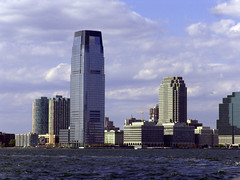
Goldman Sachs buildingImage by lymangsr via Flickr.The GS TowerThanks again to a reader who brought this to my attention.  It is a post from Business Insider...Clusterstock - 15 Reasons Why You Don't Want To Work At Goldman Sachs - Random strangers hate you for no reason - which is reason number 6 out of the 15.


Read it from the beginning...click here

In it we got a one liner acknowledgement which read:
Anonymous people on the internet publish a website, GoldmanSachs666.com, about how evil you are.
Well, I appreciate the "mention" but just want to clarify that we are not "Anonymous people", I am, in fact, very visible.  I fully disclose my name, email and phone numbers on this site as well as other sites I publish.  Our founder, Mike Morgan, also was not Anonymous when he created this blog.  In fact, he was international news for some time due to Goldman Sachs attempt to shut him "up" by shutting down this site.  Obviously, they lost.

 Be that as it may, Business Insider was right, our effort is to expose Goldman Sachs, their seemingly illegal behaviors and how their evil actions caused so much harm to this nation, their fellow citizens and to nations and people around the globe.  I have said it before and will say it again, if true investigations were done and not stymied by government officials, the outcome could indicate that Goldman's actions have been and probably still are treasonous.  How's that for evil?

Read it all...click here

Enhanced by Zemanta

Some Nuts and Bolts About Goldman Sachs

The following article makes some interesting comments and criticisms about the leadership of Lloyd Blankfein and the Goldman Sachs business model. It quietly quotes those who present unfavourble opinions about those areas and offers some small suggestions on how to mend the failures of Goldman Sachs. "Conflicts of interest" are especially prominently discussed.

When Goldman Sachs is described as having difficulty in deciding whether a client is "a customer" or "prey" the whole discussion becomes twisted with Goldman's greed and weak ethics. One needs to read Matt Taibbi's Rolling Stone piece on Goldman Sachs in order to clean out one's palate from all the fluff by reading about the real Goldman Sachs's business model and how it sought to destroy the wealth of the many in order to redeploy it to those in the banking business.

Goldman Model Championed by Blankfein Planted Seeds of Distress
By Christine Harper - Bloomberg Businessweek

The firm’s management shows “resistance to change” and is “doing business in a bubble,” one of the three student teams explained in a PowerPoint presentation. Another recommended creating an “ethics role” within Goldman Sachs’s securities division. Kessler, who teaches management at Pace University’s Lubin School of Business, peppered the students with questions. Could cohesive culture be a weakness as well as a strength?

Such critiques have been rare in Goldman Sachs’s 142-year history. The company’s status as Wall Street’s most powerful and profitable securities firm -- with a leadership that produced two U.S. Treasury secretaries -- has lured top students from Ivy League business schools. After financial markets collapsed in 2008, driving Goldman Sachs and rivals to accept taxpayer aid, the investment bank became the most vilified on Wall Street.

Bungled public relations and a thirst to find a scapegoat for the worst U.S. economic crisis since the Great Depression may explain some of the shift in the firm’s reputation under Chairman and Chief Executive Officer Lloyd C. Blankfein. The mistrust and waning investor faith in the company’s prospects are rooted in something more fundamental: Blankfein’s reliance on trading and investing the bank’s own capital to reap profits, even if that meant sometimes competing with clients.

‘Significant Challenges’

“The idea that you can manage what is a tremendously conflicted array of relationships is ridiculous,” said Michael C. Aronstein, a 32-year Wall Street veteran and president of New York-based Marketfield Asset Management LLC. “That’s exactly at the heart of it.”

Blankfein’s business model was ideal for a period of high leverage and low regulation, producing average annual profits more than double those achieved under his predecessor, Henry M. Paulson. As new capital rules and limits on proprietary trading take effect, those profits will be harder to achieve, said analysts including Fiona Swaffield of RBC Capital Markets.

“Goldman Sachs’s business model faces significant challenges in a post-crisis world,” according to a June 13 investor note by RBC analysts led by Swaffield, who’s based in London and rates the stock “underperform.”

David Wells, a spokesman for Goldman Sachs, declined to comment or make Blankfein available for an interview.

Return on Equity

In the first half of 2011, as trading revenue dropped 25 percent, Goldman Sachs’s return on equity slumped to 8 percent, or 10 percent excluding the cost of repurchasing preferred stock from Warren Buffett’s Berkshire Hathaway Inc. That’s down from 13 percent in the first half of last year.

“Our normal desire is to get to 20 percent; I think it’s going to be very tough in this environment,” Chief Financial Officer David Viniar said on July 19 after the firm reported second-quarter net income that fell short of analysts’ estimates. “I’d be surprised if we did that this year.”

With its business practices under scrutiny by the U.S. Securities and Exchange Commission and the Senate Permanent Subcommittee on Investigations, Goldman Sachs is fighting to maintain the trust of clients. The firm paid $550 million last year to settle an SEC lawsuit alleging it duped buyers of a 2007 mortgage-linked investment. The Senate subcommittee’s bipartisan report on the crisis, under review by the SEC and Department of Justice, accused the bank of misleading customers.

While Goldman Sachs didn’t admit or deny wrongdoing under the SEC settlement, the largest ever by a Wall Street firm, the company said it made a “mistake” in its marketing materials about the investment.

‘Wall Street Shark’

After writing a history of Goldman Sachs that was published in April, William D. Cohan described the firm in a Bloomberg Television interview as “the perfect embodiment, the ultimate evolution, of the Wall Street shark.” A poll of Bloomberg subscribers in May found 54 percent had an unfavorable view of Goldman Sachs, more than any other major Wall Street firm.

Jay W. Lorsch, a Harvard Business School professor, said the bank’s focus has shifted toward “more immediate greed” from long-term gains because Blankfein and many of his deputies come from a trading background instead of investment banking. Lorsch, who helped run an education program for new Goldman Sachs partners in the late 1980s, is “probably the world’s expert on governance,” said his Harvard colleague and Goldman Sachs board member William W. George.

“Goldman now needs to be more thoughtful about how they are perceived,” Lorsch said. “Lloyd needs to be careful in public pronouncements and testifying before Congress. Lloyd is coming across looking pretty greedy himself.”

Read the whole article here

Read Matt Taibbi's article here

Also read more of Matt Taibbi here